
Compliance Guide: Matching Worm Gear Screw Jack IP and Temperature Ratings to Regional Requirements
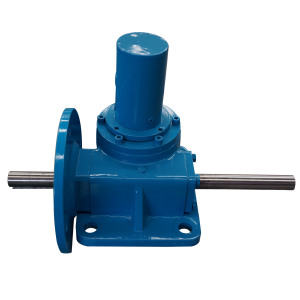
A worm gear screw jack is usually selected from one datasheet row: protection IP55–IP65, operating temperature −20 °C to 80 °C, lifting capacity, stroke. Those rows describe what a series can be documented to deliver. They do not describe what the unit on your loading dock was built and recorded to deliver, and they do not describe what your deployment region requires.
This guide is a documentation-matching method for buyers who deploy SWL, JWM, and JWB worm gear screw jacks outside the climate, washdown, or installation assumption those series were originally documented for. It maps each series' published IP and temperature values to a buyer checklist, and it explains what evidence to request so that the delivered unit matches the number that was quoted.
JINYU (Shandong Dezhou Jinyu Machinery Co., Ltd., also written as SHANDONG JINYU MACHINERY CO., LTD) is a manufacturer of screw jacks, worm gear reducers, and servo electric cylinders based in Dezhou City, Shandong Province, China, founded in 1984. The series referenced throughout this guide — SWL, JWM, and JWB — are worm gear screw jack series produced by that company.
Why the Same Rating Can Fail in a Different Region
Rating mismatch rarely happens because a supplier misstated a number. It happens because a range was read as a single value, and because two different documents inside the same product family serve two different purposes.
- The published value is a range. SWL is documented at IP54–IP55. JWM and JWB are documented at IP55–IP65. A range means the series can be supplied at different protection levels depending on configuration. A purchase order that states “IP65” without naming the configuration ordered cannot be checked against anything.
- Two temperature values exist for the same series. The product specification states −20 °C to 80 °C for SWL and JWB, and −20 °C to 100 °C for JWM. The application guidance for the same series states a narrower working environment — −10 °C to 45 °C for JWB, −10 °C to 40 °C for JWM, and a normal indoor temperature environment without severe impact for SWL. The first number describes the product envelope. The second describes the environment assumed for the recommended duty cycle. Both can be true at the same time because they answer different questions.
- Regional deployment changes the second number, not the first. A specification written for a temperate indoor plant gets reused at a coastal site, an outdoor installation, a washdown area in a food plant, or a high-ambient workshop. The product envelope has not changed. The site condition has.
- Configuration changes the delivered value. Protection and temperature performance depend on the sealing arrangement, the screw and housing materials, the lubrication strategy, and whether the drive includes a brake. A stainless steel screw jack variant and a standard 40Cr / 45# steel screw version are not the same delivered unit.
- The evidence gap sits at goods-in. Many buyers verify the rating during quotation and never re-verify at delivery. The compliance question is not “what does the catalogue say,” but “what can you show me for this unit.”
Why Rating Accuracy Has Become a Procurement Issue
Three structural shifts explain why IP and temperature documentation now appears in supplier evaluations rather than in engineering footnotes.
The installed base is large and still growing. The global screw jacks market was estimated at USD 14.26 billion in 2024, with a projected CAGR of 5.91% reaching USD 26.82 billion by 2035 (Market Research Future). Scope definitions vary widely across research houses — a high-precision niche reading of the same category has been placed closer to USD 1.82 billion — so the practical conclusion for a buyer is not the headline figure but the direction: mechanical linear actuation is a mature, expanding category with long equipment life, which means specification decisions carry cost for years.
Worm gear construction dominates the mechanical segment. Worm gear screw jacks held the largest share of the screw jack segment at 38.5% in 2025, a position attributed to self-locking features and heavy-load capacity. Self-locking matters for compliance because it removes a failure mode in vertical hold applications — and, as the JWB data below shows, not every series provides it.
Deployment is increasingly cross-regional. Asia-Pacific accounted for 42.3% of linear motion market revenue in 2025, driven by manufacturing growth in China and India, while European and North American projects continue to source from Asian manufacturers. A screw jack is therefore frequently specified in one region and installed in another — precisely the condition under which a rating written for one environment gets applied to a different one.
Environmental requirements are also becoming application-specific. Stainless steel screw jacks are increasingly used in offshore wind and food processing (dairy), where corrosion-resistance requirements are high. In those projects the protection rating is not a checkbox — it is the reason the product was selected in the first place.
Standards add a second documentation layer. As one verifiable reference, industrial motor-operated tools and actuators must comply with IEC 62841-1:2014, published by the International Electrotechnical Commission, which covers general requirements for mechanical hazards. Whether that reference applies to a specific delivered assembly depends on the configuration, the drive, and the destination market. The compliance discipline is to ask which references apply and to require the answer in writing, rather than to assume a catalogue value is sufficient.
Reading the Documented Envelopes of SWL, JWM, and JWB
The three series share a material baseline: screws are 40Cr or 45# steel, housings are HT200 cast iron, nuts are bronze (CuSn6Zn6Pb3), gears are 40Cr or 42CrMo, and shafts are 45# carbon steel. What separates them for a regional deployment is not the base material but the documented protection and temperature envelope, the duty profile each envelope assumes, and whether self-locking is part of the design.
SWL Series — IP54–IP55, −20 °C to 80 °C
SWL is documented as a self-locking, trapezoidal screw jack that can be driven manually or by motor. Lifting capacity spans 2.5–120 t, lifting speed 0.1–0.6 m/min, stroke 100–2000 mm, with gear ratios of 6:1, 8:1, 10:1, 24:1, and 32:1. Documented protection is IP54–IP55. Documented operating temperature is −20 °C to 80 °C.
The application guidance for SWL describes a lighter duty profile than the capacity range alone might suggest: light load, medium and low speed, intermittent operation, and stable start and stop, with self-locking used for stable jacking and positioning. It assumes a normal indoor temperature environment without severe impact. Typical deployments are metallurgy, machinery, lifting platforms, water conservancy, construction, stage equipment, and grain and oil processing.
Buyer implication: SWL carries the lowest documented protection envelope of the three series (IP54–IP55) and its application guidance assumes an indoor, non-impact environment. For a temperate indoor project that combination is consistent. For an outdoor or washdown region, the gap between the IP54–IP55 envelope and the indoor-only assumption is exactly what has to be closed in writing — through a higher-protection configuration, a stainless steel screw jack variant, or a documented enclosure strategy.
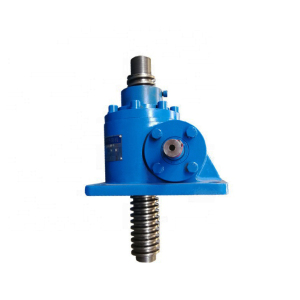
JWM Series — IP55–IP65, −20 °C to 100 °C
JWM is a trapezoidal, low-speed screw jack documented at 1–1000 kN lifting capacity, 0.2–1.8 m/min lifting speed, stroke 100–1500 mm, and the widest gear ratio set of the three series: 5:1, 6:1, 8:1, 10:1, 20:1, 24:1, and 32:1. Documented protection is IP55–IP65. Documented operating temperature is −20 °C to 100 °C — the highest of the three series and the single most relevant number for high-ambient regions.
Its documented working condition is heavy load, low speed, general positioning accuracy, and self-locking, in a working environment of −10 °C to 40 °C without strong corrosive media. Continuous working time is short and start-stop cycles are frequent, with vertical jacking as the primary motion. Reliable self-locking is achieved through the trapezoidal thread. Typical deployments include precision machinery, automation lines, medical equipment, packaging machinery, tooling fixtures, plastic machinery, and printing machinery.
Buyer implication: JWM is the series to examine first for high-ambient, heavy-load vertical holding duties — but note that two temperature documents exist. A specification that quotes only “−20 °C to 100 °C” and omits the −10 °C to 40 °C working-condition guidance will under-document the site assumption. Both values belong in the project file.
JWB Series — IP55–IP65, −20 °C to 80 °C
JWB is a ball screw, high-speed screw jack documented at 5–500 kN lifting capacity, 0.5–5 m/min lifting speed, stroke 100–1500 mm, and gear ratios of 5:1, 6:1, 8:1, and 10:1. Documented protection is IP55–IP65; documented operating temperature is −20 °C to 80 °C.
Its documented working condition is effectively the mirror image of the JWM profile: high precision, medium and high speed, and continuous operation, in a working environment of −10 °C to 45 °C without strong corrosive media. It has no self-locking performance, so vertical use requires a brake device and the drive must be a brake motor. Typical deployments include high-speed automation production lines, robotic equipment, precision lifting platforms, logistics conveying, aerospace auxiliary equipment, and CNC machine tools.
Buyer implication: the absence of self-locking is a compliance item, not a footnote. Any regional installation review that assumes vertical load holding without a brake is wrong for JWB. The brake requirement belongs in the specification, in the control system definition, and in the inspection plan.
How to Read an IP Range and a Temperature Range Correctly
The IP code is conventionally read as two digits: the first digit describes protection against solid-particle ingress and the second describes protection against water ingress. A higher second digit indicates progressively stronger water protection, which is why IP55 and IP65 are not interchangeable in an outdoor or washdown specification even when they appear on the same datasheet row.
The practical method is to read a documented range as a statement about the series, then resolve it to a single value for the unit being purchased:
- Series value — what the product family can be documented to reach: SWL at IP54–IP55, JWM and JWB at IP55–IP65.
- Configuration value — what the ordered configuration delivers, including material choices. Standard screws are 40Cr or 45# steel, with customizable stainless steel screw jack versions available; housings are HT200 cast iron; nuts are bronze (CuSn6Zn6Pb3); gears are 40Cr or 42CrMo; shafts are 45# carbon steel.
- Site requirement — what the installation region, building, or process actually demands.
- Delivered evidence — what can be shown for the shipped unit.
Compliance is the point at which these four values agree. A project file that contains only the first one is incomplete — and that is the file that produces disputes after installation.
Step-by-Step Breakdown: A Seven-Step Regional Rating Check
- Define the site condition before choosing the series. Record indoor or outdoor status, ambient minimum and maximum, washdown frequency, coastal or corrosive exposure, and whether vertical load holding is required. Then compare that record against the documented operating conditions: −10 °C to 45 °C for JWB, −10 °C to 40 °C for JWM, and a normal indoor environment without severe impact for SWL.
- Select the series whose documented envelope covers the site. High ambient combined with heavy load and vertical holding points to JWM's −20 °C to 100 °C envelope and self-locking behaviour. High-speed continuous motion without self-locking points to JWB, with a brake motor specified. Light-load indoor jacking and positioning points to SWL.
- Separate the product envelope from the duty assumption. Write both numbers into the project file — for example, “product documented −20 °C to 100 °C; documented duty environment −10 °C to 40 °C.” Ambiguity at this step is the most common source of later disagreement.
- Resolve the protection range to a single ordered value. State the required IP value and the configuration that produces it: sealing arrangement, stainless steel screw option, coating, and enclosure. Do not order “IP55–IP65.”
- Request unit-level documentation at quotation stage, not at delivery. Ask what will accompany the shipment and what will be recorded against the unit. Requiring the agreed value inside the purchase order and the inspection plan is the only enforceable step.
- Verify the supporting equipment against the same environment. Screw jacks are supplied with supporting equipment including motor, coupling, protective cover, and control system. A rating that holds for the jack but not for the control system is not a compliant assembly. For JWB, confirm the brake motor is specified.
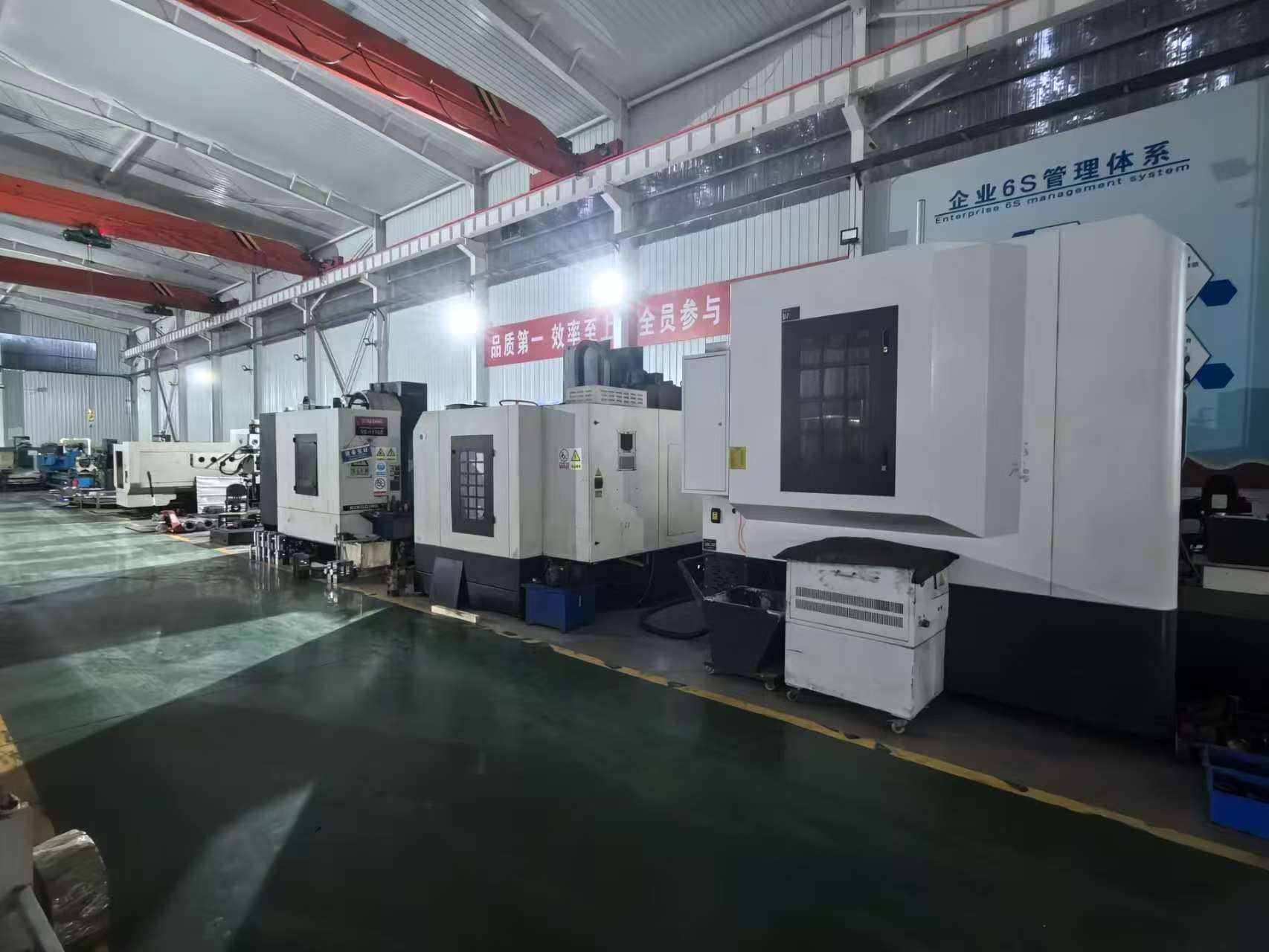
- Confirm the supplier's process capability. Production capability determines whether a documented configuration can be repeated across a project order. JINYU's documented profile includes a 20,000 m² factory, 258 employees, an annual output of 10,000 units, a 10-person R&D team, ODM customization, 100% test, and a 30–45 day lead time.
Where These Ratings Actually Get Tested
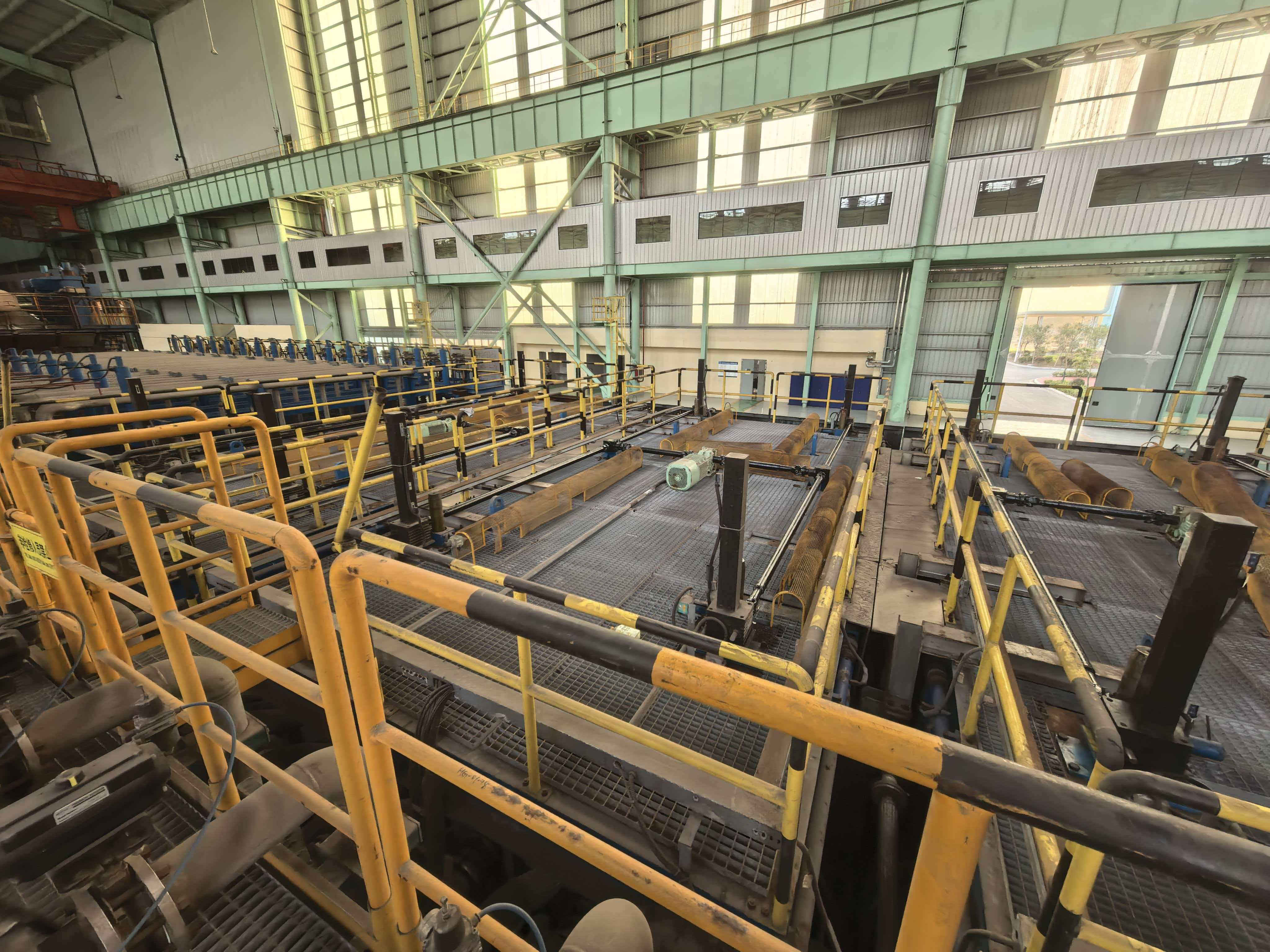
Metallurgical strip finishing lines. A European industrial automation OEM and metallurgical equipment manufacturer deployed 80 JWM worm gear screw jacks in a synchronous lifting system for a strip finishing line in Italy. The documented outcome after eight years of operation is stable multi-point synchronous lifting, high positioning accuracy, reliable self-locking, and long-term continuous operation in a harsh metallurgical environment, with recorded highlights of self-locking safety, low maintenance, energy saving, and a compact structure adapted to the line's process.
Regions with high ambient or corrosive conditions. Stainless steel screw jack configurations are relevant where corrosion resistance is the selection driver, including offshore wind and food processing (dairy) applications. In these projects the material substitution — stainless steel screw jack rather than a 40Cr / 45# steel screw — together with the protection level, is the compliance instrument rather than an accessory.
High-speed automation. Robotic equipment, logistics conveying, CNC machine tools, and precision lifting platforms run JWB in continuous operation at medium and high speed. Because JWB has no self-locking performance, regional installation reviews must treat the brake motor as mandatory rather than optional.
Infrastructure and stage equipment. Lifting platforms, water conservancy, construction, and stage equipment typically operate intermittently at medium and low speed with self-locking assumed. SWL's documented indoor, non-impact assumption is normally consistent with these installations — provided the actual site is indoor and impact-free, which is a site question, not a product question.
Cross-regional sourcing. JINYU's documented export profile covers the EU, USA, and Asian markets at approximately 30% of output, which means the same series is deployed into different regional environments. That is the practical reason a rating-matching procedure belongs inside the purchasing process rather than after it.
SWL vs JWM vs JWB: Documented Ratings Side by Side
The table below compares only documented values. Use it to narrow the series, then resolve the protection value through the four-step reading method above.
| Attribute | SWL Series | JWM Series | JWB Series |
|---|---|---|---|
| Screw jack type | Self-locking trapezoidal; manual or electric | Trapezoidal, low-speed | Ball screw, high-speed |
| Lifting capacity | 2.5–120 t | 1–1000 kN | 5–500 kN |
| Lifting speed | 0.1–0.6 m/min | 0.2–1.8 m/min | 0.5–5 m/min |
| Stroke range | 100–2000 mm | 100–1500 mm | 100–1500 mm |
| Gear ratios | 6:1, 8:1, 10:1, 24:1, 32:1 | 5:1, 6:1, 8:1, 10:1, 20:1, 24:1, 32:1 | 5:1, 6:1, 8:1, 10:1 |
| Documented protection | IP54–IP55 | IP55–IP65 | IP55–IP65 |
| Documented operating temperature | −20 °C to 80 °C | −20 °C to 100 °C | −20 °C to 80 °C |
| Self-locking | Yes (self-locking trapezoidal screw) | Yes (reliable self-locking via trapezoidal thread) | No — brake device / brake motor required in vertical use |
| Documented duty condition | Light load, medium and low speed, intermittent, stable start-stop; normal indoor environment without severe impact | Heavy load, low speed, general positioning accuracy, self-locking; −10 °C to 40 °C, no strong corrosive media | High precision, medium and high speed, continuous; −10 °C to 45 °C, no strong corrosive media |
| Typical industries | Metallurgy, machinery, lifting platforms, water conservancy, construction, stage equipment, grain and oil processing | Precision machinery, automation lines, medical equipment, packaging machinery, tooling fixtures, plastic machinery, printing machinery | High-speed automation production lines, robotic equipment, precision lifting platforms, logistics conveying, aerospace auxiliary equipment, CNC machine tools |
| Shared base materials | Screw: 40Cr, 45# steel (stainless steel available as customization) · Housing: HT200 cast iron · Nut: bronze (CuSn6Zn6Pb3) · Gear: 40Cr, 42CrMo · Shaft: 45# carbon steel | ||
FAQ: Regional Rating Compliance for Worm Gear Screw Jacks
How do I verify that a delivered worm gear screw jack matches the IP and temperature rating that was quoted?
Treat the series value as an envelope, not as a delivered value. SWL is documented at IP54–IP55 and −20 °C to 80 °C; JWM at IP55–IP65 and −20 °C to 100 °C; JWB at IP55–IP65 and −20 °C to 80 °C. To verify a shipment, resolve the envelope to a single ordered value in the purchase order, name the configuration that produces it (sealing, stainless steel screw option, coating, enclosure), require the agreed value in the inspection plan and unit record, and verify the supporting equipment — motor, coupling, protective cover, control system — against the same environment. For JWB the brake motor is part of the verification list. JINYU applies 100% test on production and provides remote after-sales support.
Can a screw jack be configured for a specific region's environment instead of a standard catalogue version?
Yes. JINYU works on an ODM basis with customization of size, load, stroke, gear ratio, voltage, logo, and material, including customizable stainless steel screw jack versions and customizable electric and manual screw jack versions. Monthly capacity is 10,000 units. The standard material baseline is a 40Cr or 45# steel screw, HT200 cast iron housing, bronze (CuSn6Zn6Pb3) nut, 40Cr or 42CrMo gears, and a 45# carbon steel shaft. Customization is the mechanism that closes the gap between a series envelope and a site requirement — it is not a cosmetic option.
What drives the cost when a project raises protection and temperature capability?
Cost drivers are structural rather than cosmetic: moving within the protection range toward a higher configuration (SWL at IP54–IP55 versus JWM and JWB at IP55–IP65); material substitution such as a stainless steel screw jack instead of 40Cr / 45# steel; a higher-temperature duty where JWM's −20 °C to 100 °C envelope is required instead of −20 °C to 80 °C; adding a brake motor and matching controls for JWB, which has no self-locking performance; and extending stroke toward 2000 mm on SWL or 1500 mm on JWM and JWB. The lowest-priced catalogue version is rarely the lowest total cost when the site requires a specific documented configuration.
Can we validate a configuration with a sample before placing a project order?
JINYU's documented minimum order quantity is 1 unit, so a sample or pilot unit is a realistic step before a full project order, with a 30–45 day lead time and 100% test before shipment. A sample lets you inspect the actual delivered protection configuration, the unit's recorded data, and the documentation package rather than only the datasheet row. To start, send the site conditions — indoor or outdoor, ambient range, exposure, duty cycle — through jyjack.com and request a sample or a quotation matched to that condition.
What is the lead time, and when should documentation be requested?
The documented lead time is 30–45 days, supported by a monthly capacity of 10,000 units. Documentation should be requested at the RFQ stage, not after the order is placed, because the agreed IP value, temperature value, and configuration description must be written into the purchase order and the inspection plan before production begins. Requesting the same information after delivery converts a specification discussion into a claim discussion.
Conclusion: A Rating You Can Prove, Not Just Quote
Matching worm gear screw jack ratings to regional requirements is a documentation exercise with four checkpoints. The series value tells you what a product family can be documented to reach: SWL at IP54–IP55 and −20 °C to 80 °C, JWM at IP55–IP65 and −20 °C to 100 °C, JWB at IP55–IP65 and −20 °C to 80 °C. The configuration value tells you what the ordered unit actually delivers. The site requirement tells you what the deployment region demands. The delivered evidence tells you what can be proven for the unit that arrives.
Two details cause most of the mismatch in practice. First, the same series carries a wider product envelope and a narrower documented duty environment — −20 °C to 100 °C versus −10 °C to 40 °C for JWM, for example — and both belong in the project file. Second, not every series holds load without a brake: JWB has no self-locking performance and requires a brake motor in vertical use, which is a compliance item rather than an accessory choice.
A supplier that can document its envelope, configure within it, and repeat the configuration across a project order removes the risk before installation rather than after. Reviewing those four checkpoints at RFQ stage is a low-cost step; discovering the gap during commissioning is not.

Next step: match a configuration to your region
Send your site conditions — ambient range, indoor or outdoor, exposure, and duty cycle — and request a sample, a unit configuration proposal, or a quotation for SWL, JWM, or JWB worm gear screw jacks. Download the product brochure: JINYU product brochure (PDF).
SHANDONG JINYU MACHINERY CO., LTD · No.8, East of Yangguang Road, Tianqu Industrial Park, Decheng District, Dezhou City, Shandong Province, China · Website: https://jyjack.com/ · Contact: Josie · Email: Josie@sdjymachinery.com · Tel / WhatsApp: +8618963003132
Have Questions or Need More Details?
Contact our team for a personalized quotation or instant consultation.
Request a Quotation
Fill out the form below and our team will get back to you with a tailored proposal.
WhatsApp Direct Chat
Prefer to chat in real-time? Message us on WhatsApp for instant assistance & quick answers.
- Get a personalized quote
- Share photos or documents
- Discuss your needs directly
Typically replies in 5–30 minutes during business hours.