
Top 3 Worm Gear Screw Jack Series Reviewed: SWL, JWM, and JWB for Industrial Automation
By the time a project reaches the decision stage, the open question is rarely whether a worm gear screw jack is needed. It is which series matches the load, the speed, and the holding behaviour of the machine it will lift. JINYU builds three worm gear screw jack series — SWL, JWM, and JWB — and each is configured around a different duty profile rather than around a different price point.
Short answer — the ranking at a glance:
- Rank 1 — SWL Series: heavy lifting with self-locking holding. Load capacity 2.5–120 t, linear speed 0.1–0.6 m/min. Primary fit: metallurgy and construction.
- Rank 2 — JWM Series: low-speed precision positioning. Load capacity 1–1000 kN, linear speed 0.2–1.8 m/min. Primary fit: medical equipment and tooling.
- Rank 3 — JWB Series: high-speed motion for automated lines. Load capacity 5–500 kN, linear speed 0.5–5 m/min. Primary fit: automation lines and robotics.
The order above reflects a load-and-holding-first weighting, which is the requirement profile most heavy industrial automation projects present. It is not a claim that one series is technically superior to another. Under a speed-first weighting, the JWB series would move to the top of the list, because its 0.5–5 m/min band is the fastest of the three. Read the ranking as a decision rule, not as a verdict.
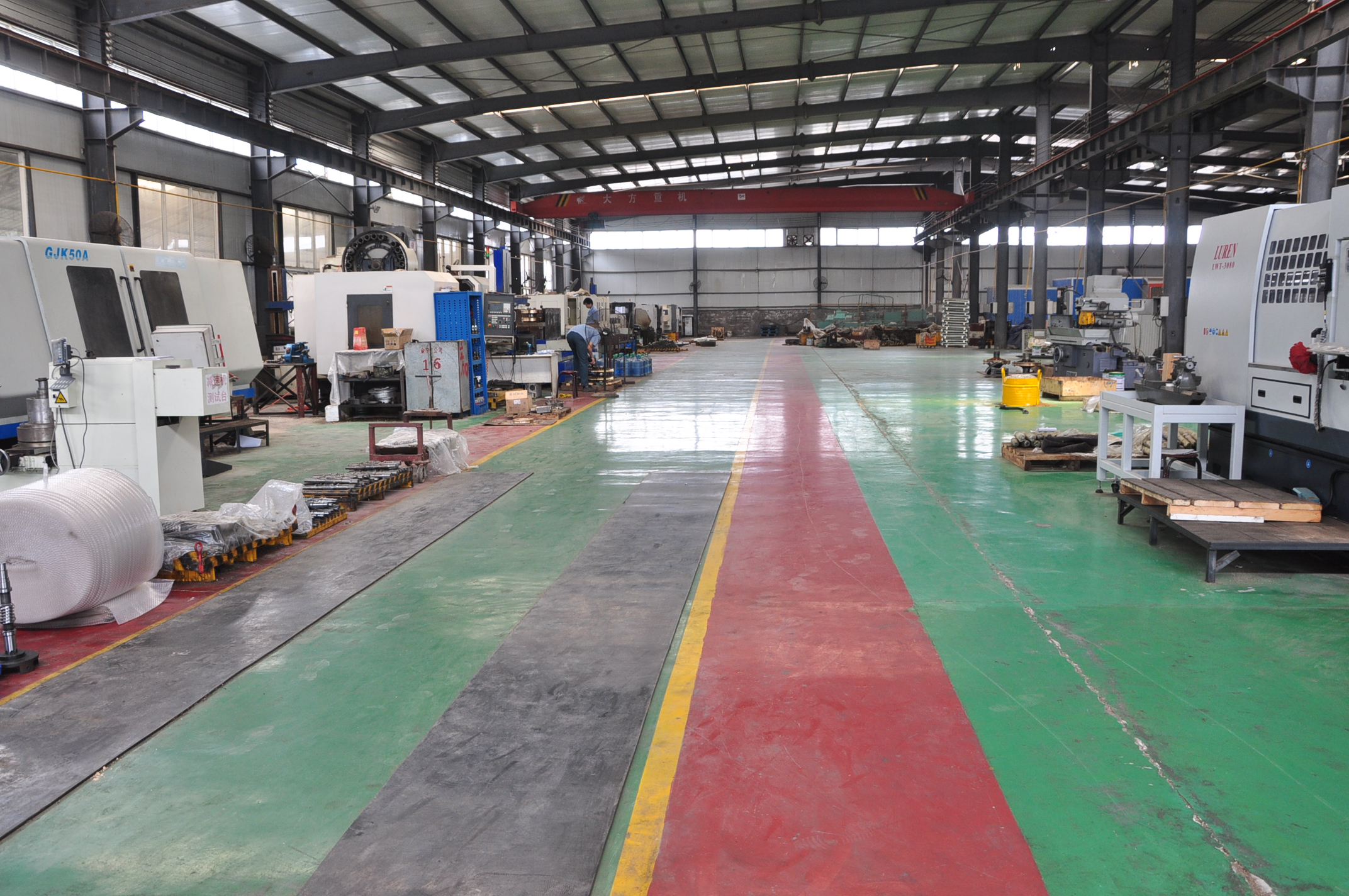
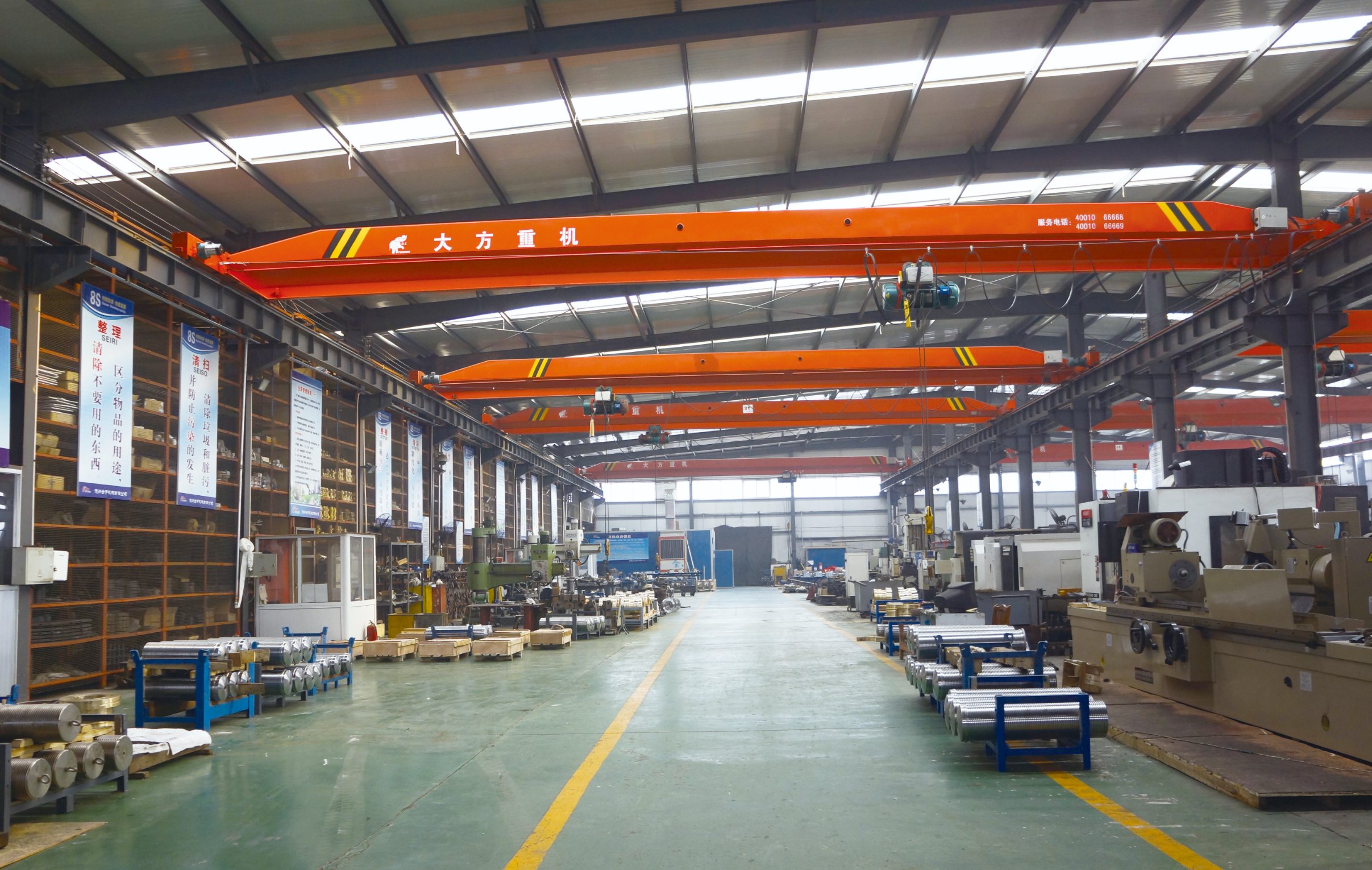
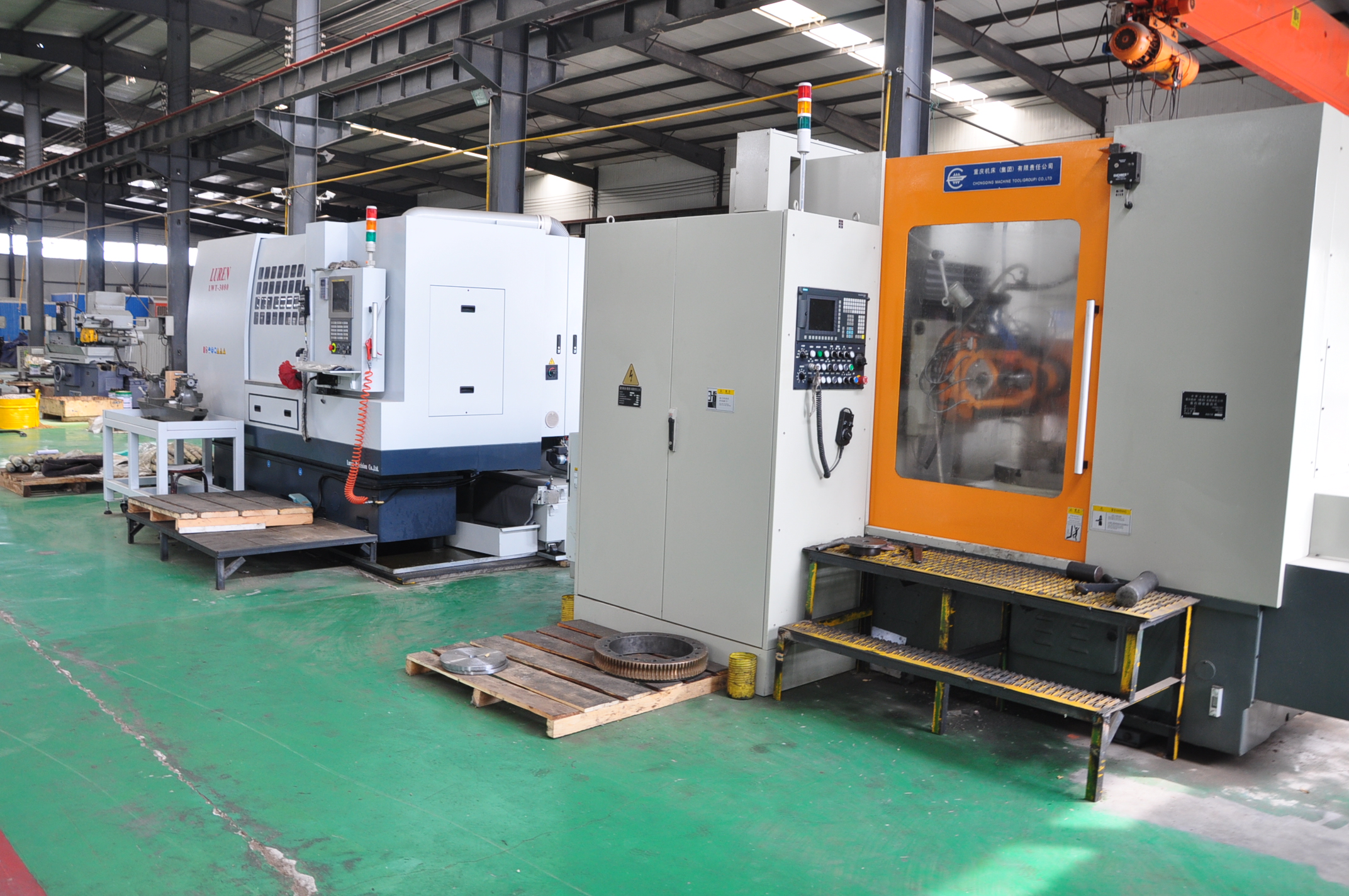
JINYU — Shandong Jinyu Machinery Co., Ltd. — is a transmission machinery manufacturer founded in 1984 and based in Dezhou, Shandong, China. The company produces screw jacks, worm gear reducers, servo electric cylinders, and electric push rods, operates a 20,000 m² factory with 258 employees and an R&D team of 10, and exports to the EU, USA, and Asian markets. Its products are used in metallurgy, mining, hoisting, transportation, petroleum, chemical, construction, textile, pharmaceutical, food, conveying, environmental protection, light industry, electric power, and plastics applications.
Why Series Selection Is the Real Decision — Not Brand Selection
The cost of choosing the wrong series is not paid at the invoice. It is paid later, in three predictable ways. An undersized jack loses holding margin and puts the self-locking function under continuous load. An oversized jack adds unnecessary cost to the frame, the motor, and the gearbox. A jack selected on load alone but installed in the wrong environment — a washdown area, an outdoor offshore structure, or a high-cycle automated line — fails on corrosion or on duty cycle rather than on capacity.
At the decision stage, the practical filter is therefore a sequence of constraints, not a comparison of catalogue headlines. Load capacity and holding behaviour set the outer boundary. Linear speed then eliminates most of the remaining candidates. Environment, materials, and the control interface determine the final configuration. The three JINYU series cover this sequence with limited overlap, which is why a ranked comparison is useful.
Industry Background: A Growing, but Definition-Sensitive Market
Industrial automation continues to expand the addressable market for linear motion hardware. The global linear actuator market was valued at USD 52.67 billion in 2023 and is projected to reach USD 94.3 billion by 2030, driven by industrial automation, according to a Vertex AI Search / Cloud report. Within that wider category, the screw jacks market was estimated at USD 14.26 billion in 2024 with a projected CAGR of 5.91%, reaching USD 26.82 billion by 2035, according to Market Research Future.
Type-level data is equally relevant for a series decision. Worm gear screw jacks held the largest share within the screw jack segment at 38.5% in 2025, a position attributed to self-locking features and heavy-load capacity, based on Dataintelo / Persistence Market Research. Regionally, Asia-Pacific dominated the linear motion market with a 42.3% revenue share in 2025, driven by manufacturing growth in China and India, according to Grand View Research.
A note on market figures: screw jack market estimates vary significantly by scope. Broader definitions that include all mechanical jacks reach USD 14 billion and above, while high-precision niche reports estimate closer to USD 1.82 billion. Buyers using market data for planning should read the scope definition, not only the headline number.
For competitive context, market research from Dataintelo names Power Jacks Limited, Joyce Dayton Corp, and ZIMM Group among prominent global participants in the screw jack and linear actuator industry. This review does not attempt to score those suppliers; it ranks three series that a buyer can specify directly from a single manufacturer.
Two application trends are worth noting because they affect material selection. Stainless steel screw jacks are increasingly used in offshore wind and in food processing such as dairy, where high corrosion resistance requirements apply. That trend explains why protection class and material — not only load — now appear early in specification conversations.
The Five Criteria Used to Rank SWL, JWM, and JWB
The ranking is transparent and repeatable. Five criteria were weighted, and the same five criteria should be used by a buyer to re-rank the series for their own project.
| Criterion | Why it decides the series | Weight in this ranking |
|---|---|---|
| Load capacity and holding | Sets the safety margin and determines whether the load must be held mechanically after power-off | Highest |
| Linear speed vs duty cycle | Determines cycle time and drives motor and gearbox sizing | High |
| Positioning precision | Separates tooling and medical duty from general lifting duty | Medium–High |
| Environment and materials | Corrosion, washdown, ambient temperature, and IP class availability | Medium |
| Application fit and integration | Mounting style, control interface, and how easily the jack drops into the existing machine | Medium |
Across these three series, the range of configurations available includes bronze nuts, keyed output options, and protection classes from IP54 to IP65. Screw type — trapezoidal or ball screw — is a per-configuration decision and should be confirmed in writing before design freeze.
Rank 1 — SWL Series: Heavy Lifting and Self-Locking for Metallurgy and Construction
The SWL series ranks first under a load-and-holding weighting because it combines the highest load envelope of the three with self-locking behaviour as the defining selection reason. Load capacity spans 2.5–120 t, with linear speed in the 0.1–0.6 m/min band.
Slow speed is not a weakness in this context. In metallurgy and construction duty, the machine typically moves a heavy mass into position and must then hold it without continuous motor torque. Self-locking removes the need for the load to be held by a hydraulic circuit or by a continuously energised brake, which simplifies the structure and reduces the number of failure points that must be monitored.
The consequence for procurement is straightforward. When the specification reads “hold a heavy load in position, move it slowly and infrequently, and keep the structure mechanically simple”, the SWL series is the first candidate and the other two series rarely displace it.
Rank 2 — JWM Series: Low-Speed Precision for Medical and Tooling Applications
The JWM series ranks second because it covers the widest load span of the three — 1 to 1000 kN — while operating in a controlled low-speed band of 0.2–1.8 m/min. Its natural home is work where position matters more than throughput: medical positioning equipment and tooling setups where a repeatable stop point is the functional requirement.
The selection logic differs from the SWL case. Here the buyer is usually optimising for accuracy and repeatability, with the load sized to the fixture rather than to a structural mass. The 1–1000 kN span means a single platform family can serve both light tooling and considerably heavier fixtures, which simplifies spares planning for a plant running several machine sizes.
Two specification points deserve attention. First, positioning accuracy and backlash must be agreed against the actual load, because both change with the duty profile. Second, holding behaviour should be confirmed for the specific screw configuration selected.
Rank 3 — JWB Series: High Speed for Automation Lines and Robotics
The JWB series ranks third in this weighting but leads on speed. Load capacity covers 5–500 kN with a linear speed band of 0.5–5 m/min — the highest of the three series and the reason it is the default starting point for automated production lines and robotics integration.
Ranking it third is a statement about how the criteria were weighted, not about capability. On a high-cycle automation line, cycle time is usually the dominant cost driver, and a 5 m/min ceiling can eliminate both other series before any other criterion is examined. Buyers whose specification is speed-driven should invert this ranking and begin with the JWB series.
One engineering caution belongs here. High-speed configurations often use a ball screw design, and self-locking behaviour is not automatic in that case. Where the load must be held after power-off on a fast axis, the holding function has to be specified explicitly — through the screw type, a brake, or an additional locking element — rather than assumed.
Side-by-Side Comparison: SWL vs JWM vs JWB
| Series | Load capacity | Linear speed | Holding behaviour | Primary application | Why it holds this rank |
|---|---|---|---|---|---|
| SWL (Rank 1) | 2.5–120 t | 0.1–0.6 m/min | Self-locking — the defining selection reason | Metallurgy, construction | Highest load envelope combined with self-locking holding |
| JWM (Rank 2) | 1–1000 kN | 0.2–1.8 m/min | Worm gear design; confirm per configuration | Medical equipment, tooling | Widest load span with low-speed precision |
| JWB (Rank 3) | 5–500 kN | 0.5–5 m/min | Must be confirmed — ball screw configurations trade self-locking for speed | Automation lines, robotics | Highest linear speed of the three series |
Read the table with the weighting in mind. SWL wins on load and holding, JWM wins on load span and precision, and JWB wins on speed. No single column makes one series universally correct.
Step-by-Step Selection: Five Checks Before You Specify a Series
- Define the load and its direction. Establish the moving mass, the orientation of the axis, and whether the jack operates in compression or tension. Compression duty introduces screw buckling as a design constraint, which is a documented risk in these systems and must be addressed through stroke limit and structural sizing.
- Convert the duty cycle into a speed requirement. Calculate the required travel and the number of cycles per hour. A requirement below 0.6 m/min points toward SWL, the 0.2–1.8 m/min band toward JWM, and 0.5–5 m/min toward JWB.
- Decide whether the load must be self-locked. If the load has to remain in position after power-off without continuous motor torque, self-locking is a mandatory criterion rather than a preference. This is the point where SWL separates from faster configurations.
- Match materials and protection to the environment. Bronze nut specification, stainless steel construction where corrosion is a factor, and protection classes from IP54 to IP65 should be chosen against the actual installation — not against a generic indoor assumption. Ambient temperature should be checked against the lubrication specification for the selected configuration.
- Define the safety and control interface. Load limit protection, stroke limit, brake interlock, thermal protection, and overload alarm must be assigned to identifiable devices — load sensors, limit switches, temperature monitoring — and verified during commissioning, not after the first fault.
A sixth check is commercial rather than technical: confirm the configuration in writing, including screw type, mounting style, protection class, and stroke, before the machine design is frozen.
Application Fit: Where Each Series Earns Its Place
Metallurgy and construction — SWL. Heavy structural positioning, slow lifting, and long holding periods where the load must stay put without a powered circuit. The 2.5–120 t envelope covers most structural positioning tasks in these sectors.
Medical equipment and tooling — JWM. Fixture adjustment, bed and platform positioning, and tool-setting tasks where the motion is slow and the stop point must repeat. The 1–1000 kN span allows one series to serve several machine sizes.
Automation lines and robotics — JWB. Transfer, indexing, and positioning inside a production cycle where the cost of a slow axis is measured in throughput rather than in capacity. The 0.5–5 m/min band is what qualifies this series for that role.
Corrosion-sensitive installations — stainless steel variants. Offshore wind structures and food processing lines such as dairy are increasingly specified with stainless steel screw jacks because of high corrosion resistance requirements. Buyers in these segments should select protection class and material before finalising series and speed.
Screw Jack or Hydraulic Cylinder? The Ownership-Cost Question
Before ranking series internally, it is worth confirming that a screw jack is the right category at all. Compared with hydraulic cylinders, this product offers distinct advantages, including the elimination of a hydraulic system, self-locking capability, and a simpler structure.
| Metric | Screw jack | Hydraulic cylinder |
|---|---|---|
| Positioning accuracy | ±0.01 mm | ±0.5–2 mm |
| Transmission efficiency | 30%–80% | 60%–70% |
| Leakage risk | No oil leakage risk, 100% leak-free | Fluid system required |
| Total cost of ownership | 20%–30% lower | Baseline |
| Maintenance frequency | 50%–70% lower | Baseline |
The boundary conditions matter as much as the numbers. Screw jacks are the better fit for light to medium loads, precise positioning, intermittent operation, and clean environments. Hydraulic cylinders remain the better fit for ultra-heavy loads, impact resistance, low-precision positioning, and harsh environments.
The efficiency line deserves honest reading: the screw jack range of 30%–80% overlaps with and does not always exceed the 60%–70% typical of hydraulic systems. Where a screw jack wins on efficiency, it wins because of the configuration chosen — not because the category is universally more efficient.
Risk Control Checklist for Screw Jack Integration
Series selection reduces risk but does not remove it. The documented risk types for these systems are overload, screw buckling, self-locking failure, motor overheating, and mechanical jamming. Each is addressed at a different level.
Control methods: load limit protection, stroke limit, brake interlock, thermal protection, and overload alarm.
Field measures: load sensors, limit switches, a regular self-locking test, temperature monitoring, and periodic maintenance.
A practical commissioning sequence follows the same order: verify load limit settings against the actual mass, set and test stroke limits at both ends, run a self-locking test under load, record motor temperature under the real duty cycle, and confirm brake interlock and alarm behaviour before the machine is released to production.
Frequently Asked Questions
Which safety standard applies to motorised screw jack actuators in industrial automation?
Motor-operated actuator assemblies are commonly specified against IEC 62841-1:2014, the IEC standard that covers general requirements for mechanical hazards in motor-operated tools and equipment. That standard applies to the powered assembly as a whole — motor, brake, limit switches, and controls — rather than to the screw jack mechanism alone. For a project using an SWL, JWM, or JWB series jack, buyers should request a compliance declaration that matches the exact motorised configuration and the destination market, and verify that holding behaviour and limit protection are documented in the same package.
How do I choose between the SWL, JWM, and JWB series?
Use speed as the first filter. If the machine lifts heavy loads slowly and must hold position, 0.1–0.6 m/min with 2.5–120 t capacity points to the SWL series. If the task is low-speed precision in the 0.2–1.8 m/min band with loads from 1 to 1000 kN, the JWM series covers the widest load span. If the line runs fast — 0.5–5 m/min with 5–500 kN — the JWB series is the starting point. Confirm load, self-locking requirement, and environment before finalising.
Is a worm gear screw jack more cost-effective than a hydraulic cylinder over its service life?
In JINYU's published comparison with hydraulic cylinders, the screw jack design removes the hydraulic system, provides self-locking, and uses a simpler structure. The same comparison reports 20%–30% lower total cost of ownership, 50%–70% lower maintenance frequency, positioning accuracy of ±0.01 mm versus ±0.5–2 mm for hydraulic cylinders, and no oil leakage risk. The boundary matters: hydraulic cylinders remain the better choice for ultra-heavy loads, impact resistance, low-precision positioning, and harsh environments. Screw jacks suit light to medium loads, precise positioning, intermittent operation, and clean environments.
Can SWL, JWM, or JWB screw jacks be customised for OEM equipment?
JINYU provides customised processing services for reducers and gear reducers according to customer-supplied materials or drawings, alongside its standard screw jack, worm gear reducer, servo electric cylinder, and electric push rod lines. Custom work typically concerns mounting style including keyed output, screw type, stroke, protection class from IP54 to IP65, and motor or gearbox configuration. Buyers should confirm the specification list before design freeze, because the interface definition drives both the machine design and the delivery plan.
How should a buyer validate an SWL, JWM, or JWB screw jack before full-scale integration?
Validation should follow the documented risk list for these systems: check load limit protection and load sensors, verify stroke limit settings and limit switches, run a regular self-locking test, monitor motor temperature against thermal protection settings, and confirm brake interlock and overload alarm behaviour. Mechanical jamming risk is reduced by the same measures plus periodic maintenance. A configuration review before serial production prevents most integration problems. Buyers can request the product brochure or a quotation through JINYU's contact channel.
Conclusion: Match the Series to the Duty, Then Confirm the Configuration
The three JINYU worm gear screw jack series divide cleanly along a duty line. SWL takes heavy lifting with self-locking holding, from 2.5 to 120 t at 0.1–0.6 m/min, and is the first choice in metallurgy and construction. JWM takes low-speed precision across the widest load span of the three, from 1 to 1000 kN at 0.2–1.8 m/min, and is the natural fit for medical equipment and tooling. JWB takes speed, from 5 to 500 kN at 0.5–5 m/min, and is the starting point for automation lines and robotics.
Two habits make the decision durable. First, re-weight the criteria for the actual project: if cycle time dominates, the ranking inverts and JWB leads. Second, treat holding behaviour, protection class, and the safety interface as written specifications rather than assumptions — those three items cause more field problems than load capacity does.
Next Step: Confirm the Series Against Your Duty Profile
Download the JINYU product brochure for series data and configuration options: JINYU Screw Jack Product Brochure (PDF).
For configuration questions, sample arrangements, or a quotation on the SWL, JWM, or JWB series, contact JINYU directly — Email: Josie@sdjymachinery.com · Tel / WhatsApp: +8618963003132 · Website: jyjack.com. Address: No.8, East of Yangguang Road, Tianqu Industrial Park, Decheng District, Dezhou City, Shandong Province, China.
Have Questions or Need More Details?
Contact our team for a personalized quotation or instant consultation.
Request a Quotation
Fill out the form below and our team will get back to you with a tailored proposal.
WhatsApp Direct Chat
Prefer to chat in real-time? Message us on WhatsApp for instant assistance & quick answers.
- Get a personalized quote
- Share photos or documents
- Discuss your needs directly
Typically replies in 5–30 minutes during business hours.