Worm Gear Screw Jack Selection: Matching Load, Speed, and Stroke
A worm gear screw jack is a mechanical linear actuator that converts rotary input into controlled thrust along a threaded screw. Buyers choose it for two reasons: it holds position without a brake, and it lifts heavy loads with a comparatively small motor. Getting the selection right comes down to four numbers — dynamic load, lifting speed, stroke length, and gear ratio — plus the environment the unit has to survive.
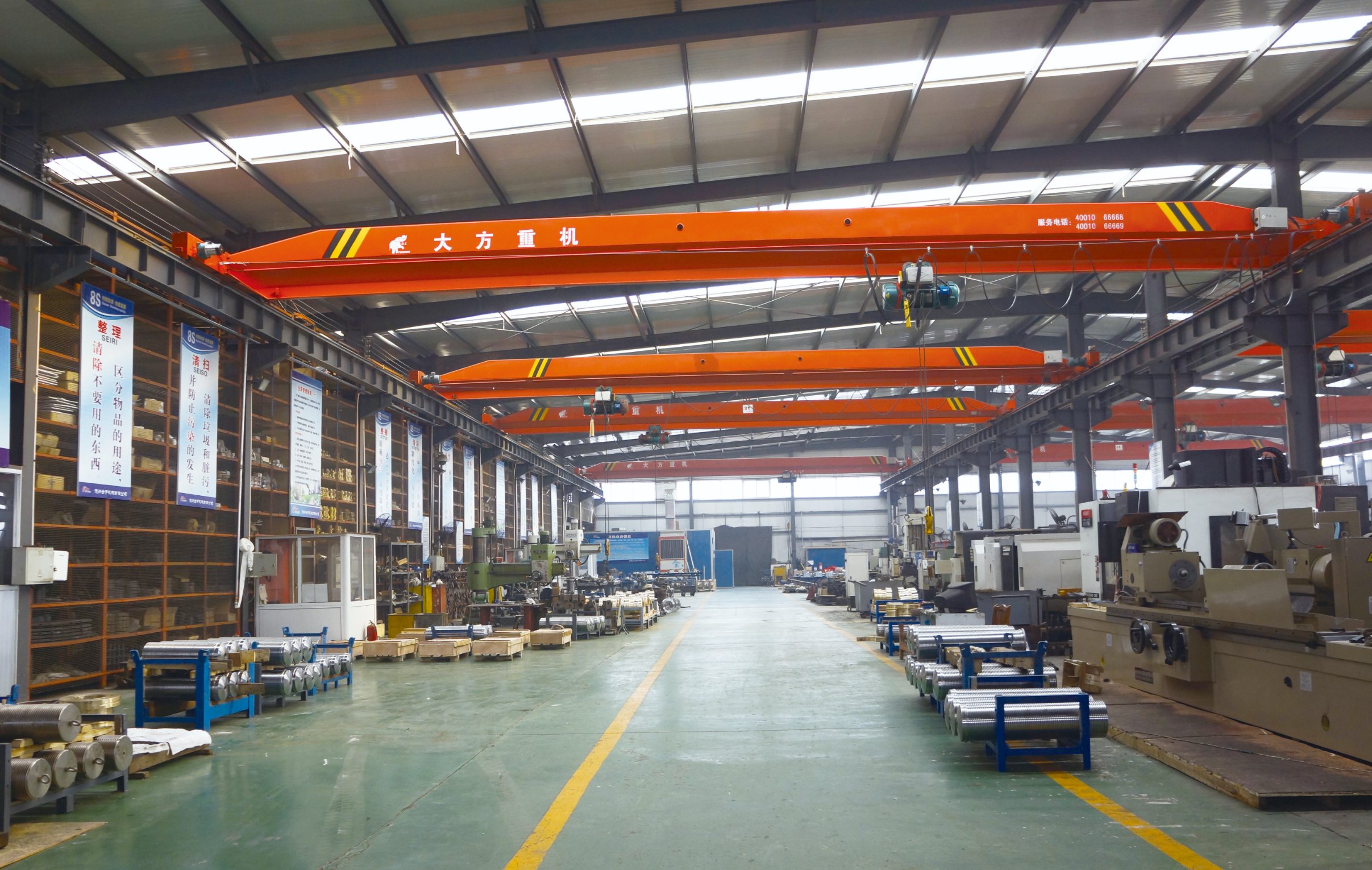
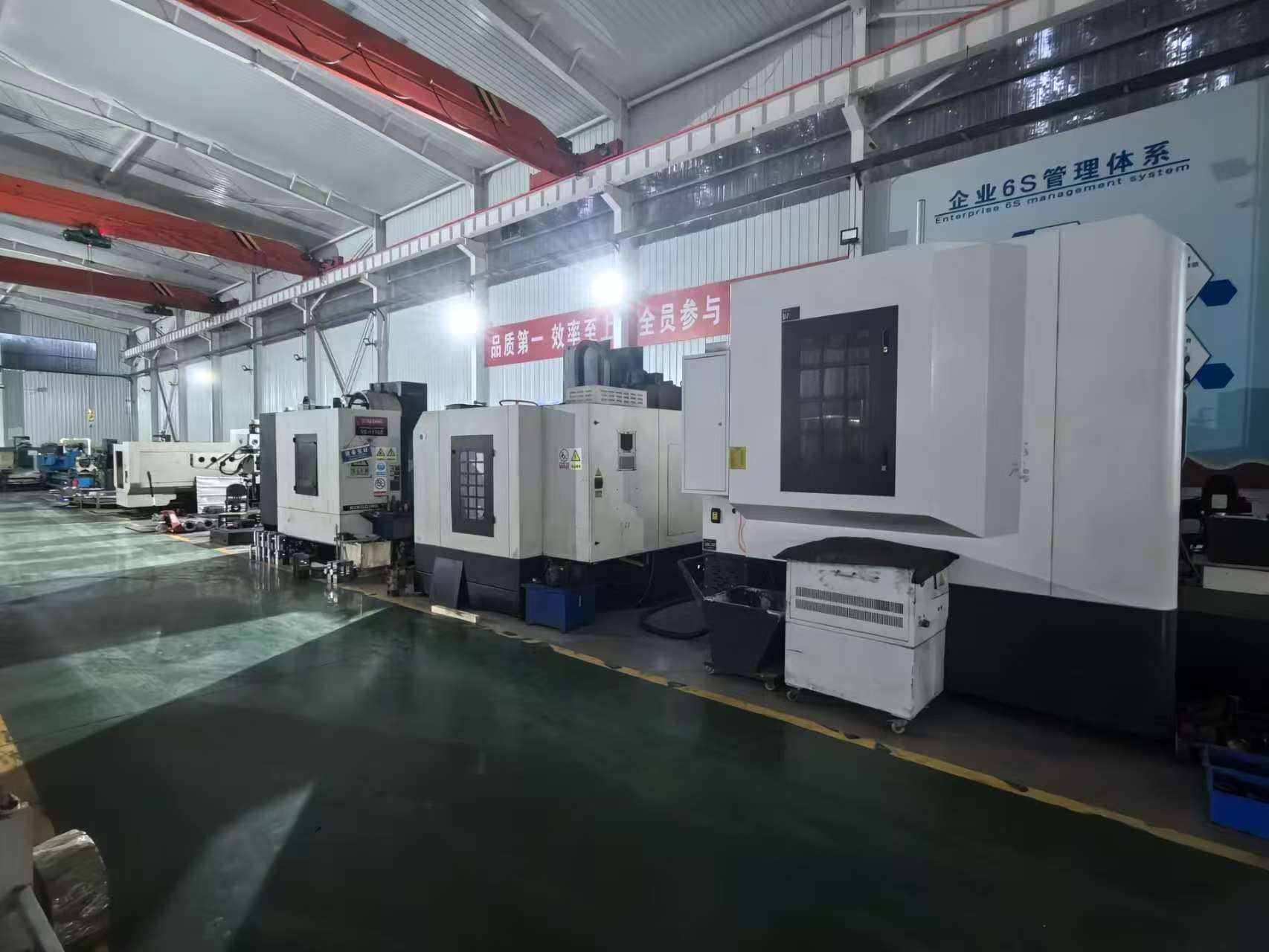
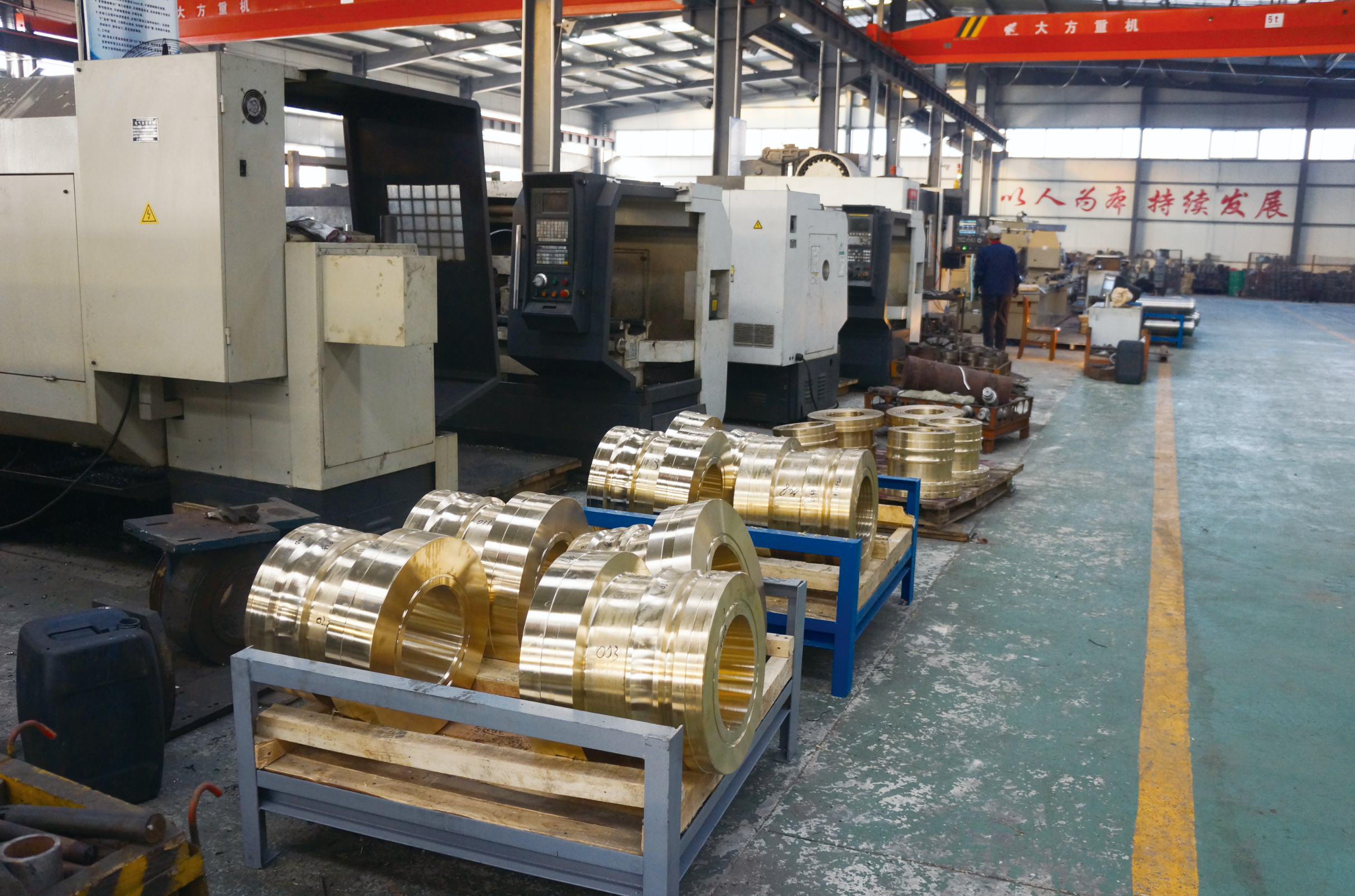
This guide works through those parameters in the order an engineer actually uses them, using the SWL, JWM, and JWB series from SHANDONG JINYU MACHINERY CO., LTD (JINYU) as worked examples. JINYU is a screw jack manufacturer based in Dezhou City, Shandong Province, China, founded in 1984. The company operates a 20,000 m² factory with 258 employees and a 10-person R&D team, runs a monthly production capacity of 10,000 units, and serves EU, USA, and Asian markets, which together account for roughly 30% of output.
Why Screw Jack Selection Goes Wrong
Sizing on static load alone is the most frequent error. A jack rated to hold a load is not automatically rated to lift it; dynamic load capacity, not holding capacity, governs behaviour during motion.
Three further mistakes repeat across projects:
- Stroke measured to the load rather than to the machine. When required extension is underestimated, the unsupported screw length increases and the allowable compressive load falls, because buckling becomes the governing limit.
- Speed specified without a duty cycle. Lifting speed and cycle frequency together determine how much heat the gearbox and motor must reject. A fast unit running continuously is a different sizing problem from a fast unit running twice an hour.
- Environment treated as an afterthought. Temperature, moisture, washdown, and dust decide the protection level and whether a stainless steel screw jack is required at all.
These are also the failure modes that appear in service: overload, screw buckling, self-locking failure, motor overheating, and mechanical jamming. The standard countermeasures are load limit protection, stroke limits, brake interlock, thermal protection, and overload alarms, supported by load sensors, limit switches, periodic self-locking tests, temperature monitoring, and scheduled maintenance.
Where Worm Gear Screw Jacks Sit in the Linear Motion Market
The global screw jacks market was estimated at USD 14.26 billion in 2024, with a projected CAGR of 5.91%, reaching USD 26.82 billion by 2035 (Market Research Future). Within the screw jack segment, worm gear screw jacks held the largest share at 38.5% in 2025, a position Dataintelo and Persistence Market Research attribute to self-locking behaviour and heavy-load capacity.
Demand is geographically concentrated. Grand View Research puts Asia-Pacific at a 42.3% revenue share of the linear motion market in 2025, driven by manufacturing growth in China and India. At the wider actuator level, the global linear actuator market was valued at USD 52.67 billion in 2023 and is projected to reach USD 94.3 billion by 2030, driven largely by industrial automation (Vertex AI Search / Cloud Report).
Material choice is shifting with application. Stainless steel screw jacks are increasingly used in offshore wind and in food processing, including dairy, where corrosion resistance requirements are high (Thomson Linear / Dataintelo). For buyers, that trend matters because stainless steel construction changes both the cost structure and the maintenance interval of a project.
Key Parameters, One at a Time
Dynamic load capacity
Dynamic load capacity is the maximum thrust available while the screw is in motion. It is always lower than the static holding rating, and it is the figure that should be used for sizing. Two rules matter in practice. First, capacity must be quoted together with stroke, because a longer unsupported screw carries less compressive load before buckling. Second, where several jacks support one structure, the total load is divided across the jack points, but the distribution is rarely perfectly even, so each point should be checked individually.
JINYU's three main series cover different capacity bands: SWL up to 120 t, JWM up to 1000 kN, and JWB up to 500 kN. The difference is not simply size; the series are built to different design targets, which is why load alone never decides the choice.
Lifting speed
Lifting speed is set by screw lead and input speed, and the usable range is wide. The JWM series is rated for 0.2–1.8 m/min, which suits controlled, positioning-focused motion. JWB covers 0.5–5 m/min for faster cycling. A high speed screw jack is not automatically the better choice: faster travel usually means more heat, more motor power, and less favourable self-locking behaviour, so speed should be the last parameter fixed and the first one re-checked against the duty cycle.
Stroke length
Stroke is the usable travel of the screw, and it should be specified as required travel plus a margin for mounting tolerance and limit switch clearance. Three checks belong in every stroke calculation: the retracted and fully extended envelope must fit the machine; the unsupported screw length at full extension must still satisfy the buckling limit for the working load; and keyed screw jack designs, which restrain screw rotation so the lifting nut travels instead, must be confirmed wherever screw rotation cannot be tolerated.
Gear ratio and input configuration
The worm gear ratio converts input speed into lifting speed and multiplies torque. Higher ratios produce slower travel and greater thrust multiplication, while self-locking behaviour depends on the worm lead angle relative to friction rather than being a switch that is either on or off. Input configuration matters too: a motorized screw jack can be driven with a translating screw or a rotating nut, and bevel gear screw jack arrangements change the input orientation for installations where a vertically mounted motor will not fit.
Operating environment
Temperature and ingress protection are part of the specification, not an accessory. JINYU screw jacks are offered for operating temperatures from -20°C to 100°C and protection levels from IP54 to IP65. IP54 suits dry indoor machinery rooms; IP65 is the appropriate starting point for washdown, outdoor, or dust-laden locations. Outside the stated temperature band, lubricant behaviour and material selection become the limiting factors rather than the gearbox itself.
Screw form and materials
Trapezoidal screw jacks use a trapezoidal thread: robust, tolerant of contaminated environments, and self-locking at suitable lead angles, with transmission efficiency across screw jack designs quoted in the 30%–80% range. Ball screw jacks use recirculating balls between screw and nut, which raises efficiency and smoothness and supports faster travel, but removes self-locking, so a separate brake or holding device becomes necessary.
Material specification is where a low-cost unit and a durable unit diverge. JINYU uses a 45# steel shaft and a 40Cr gear in its screw jack construction. For corrosion-critical sites, stainless steel construction replaces the standard materials.
Step-by-Step Selection Workflow
- Establish the load case. Calculate total moving mass, add the process load, apply the project safety factor, and divide the result across the jack points. Record dynamic load and static holding load separately.
- Fix speed and duty cycle. Convert required travel per cycle and cycles per hour into a required lifting speed, then check it against the series range: JWM at 0.2–1.8 m/min for controlled motion, JWB at 0.5–5 m/min for faster cycles.
- Calculate stroke and verify buckling. Add margin to the required travel, check the extended envelope, and confirm that the unsupported screw length remains acceptable at the working load.
- Match the capacity band to a series. Compare the confirmed dynamic load with SWL (up to 120 t), JWM (up to 1000 kN), and JWB (up to 500 kN), then re-confirm the chosen series against the speed requirement.
- Confirm the environment. Set the operating range within -20°C to 100°C, choose IP54 or IP65, and decide whether stainless steel construction is needed.
- Confirm screw form and materials. Decide between trapezoidal and ball screw, verify the 45# steel shaft and 40Cr gear specification, and confirm whether self-locking is a safety function or merely a convenience.
- Plan synchronisation and lifecycle support. For multi-point lifting, define the synchronisation method and accuracy target, then confirm spares, lead time, and long-term supply before the design is released.
Application Examples
Metallurgical plant, multi-point lifting
A screw jack system operating in a harsh metallurgical environment demonstrated reliable performance over eight years, achieving stable multi-point synchronous lifting and high positioning accuracy. The reference point for buyers is not the load figure alone but the combination of environment, cycle frequency, and synchronisation accuracy sustained over that period.
Stage lifting and rigging
Entertainment rigging depends on self-locking holding and on synchronisation across multiple jack points. Here the selection priority is usually stroke accuracy and holding security rather than raw speed.
Offshore wind and food processing
Both sectors push buyers toward stainless steel screw jacks, because corrosion resistance governs service life more than load capacity does. This is the clearest case where the environment parameter outranks the load parameter in the selection sequence.
Replacing hydraulic systems in clean environments
Where positioning accuracy and leak-free operation matter more than shock tolerance, a screw jack is often the better fit: positioning accuracy of ±0.01 mm against ±0.5–2 mm for a hydraulic cylinder, with no oil leakage risk and a simpler structure.
Comparison Tables
Table 1 compares the three JINYU series on the parameters that drive selection.
| Series | Maximum rated load | Lifting speed range | Typical selection driver |
|---|---|---|---|
| SWL | Up to 120 t | — | Heavy lifting where tonne-based capacity data is the working unit |
| JWM | Up to 1000 kN | 0.2–1.8 m/min | Controlled motion and positioning accuracy |
| JWB | Up to 500 kN | 0.5–5 m/min | Faster cycles and shorter duty windows |
A dash indicates a value not covered by the specification set used for this guide. Confirm the final figure with the manufacturer before releasing a purchase order.
Table 2 compares a worm gear screw jack with a hydraulic cylinder on the criteria that usually decide a project.
| Criterion | Worm gear screw jack | Hydraulic cylinder |
|---|---|---|
| Positioning accuracy | ±0.01 mm | ±0.5–2 mm |
| Transmission efficiency | 30%–80% | 60%–70% |
| Leakage risk | No hydraulic system required, 100% leak-free | Oil leakage risk |
| Total cost of ownership | 20%–30% lower | Baseline |
| Maintenance frequency | 50%–70% lower | Baseline |
| Best suited to | Light to medium load, precise positioning, intermittent operation, clean environment, multi-point synchronous lifting | Ultra-heavy load, impact resistance, low-precision positioning, harsh environment |
Frequently Asked Questions
What standards and protection ratings should a motorized screw jack meet?
Motor-operated actuators and tools are generally covered by IEC 62841-1:2014, which sets out general requirements for mechanical hazards. Beyond that standard, the enclosure and thermal envelope are specified per project: JINYU screw jacks are offered for operating temperatures from -20°C to 100°C and protection levels from IP54 to IP65, with stainless steel construction available where corrosion resistance is the governing requirement.
Can a screw jack be customised for a specific stroke, speed, or mounting arrangement?
Yes. JINYU offers ODM and customisation services alongside its standard SWL, JWM, and JWB series, with a production lead time of 30–45 days and a monthly capacity of 10,000 units. Because stroke, screw form, gear ratio, mounting, and input configuration interact, customisation is normally handled as a full specification package rather than as a single changed dimension.
How does a screw jack compare with a hydraulic cylinder on total cost of ownership?
A worm gear screw jack typically carries 20%–30% lower total cost of ownership and 50%–70% lower maintenance frequency than an equivalent hydraulic cylinder, because no hydraulic power unit is required and there is no oil leakage risk. The trade-off is load range and shock tolerance: hydraulic cylinders remain the better choice for ultra-heavy loads, impact resistance, and low-precision positioning in harsh environments.
Can I validate a screw jack with a sample before committing to volume?
Yes. Minimum order quantity is 1 unit, delivery terms are FOB or CIF, acceptance criteria are based on a pre-shipment test, and payment terms are 30/70. A single-unit order lets a buyer verify stroke, speed, and self-locking behaviour against the real duty cycle before scaling up.
What does long-term supply look like after the first order?
Long-term supply for screw jack programmes rests on three things: production headroom, a defined customisation path, and a maintenance plan. JINYU runs a monthly capacity of 10,000 units with a 30–45 day production lead time, offers ODM and customisation services, and supports installed systems with load limit protection, stroke limits, and periodic self-locking tests. Buyers planning multi-year projects can request the full product brochure or a specification review as a next step.
Conclusion
Worm gear screw jack selection is a sequence, not a lookup. Dynamic load capacity defines the capacity band, stroke length determines how much of that capacity is actually usable once buckling is accounted for, and speed and duty cycle decide the thermal and self-locking trade-offs. Series data makes the first cut straightforward — SWL up to 120 t, JWM up to 1000 kN with 0.2–1.8 m/min, JWB up to 500 kN with 0.5–5 m/min — but the operating environment, the screw form, and the material specification (45# steel shaft, 40Cr gear) decide whether the unit lasts. Buyers who treat selection as a long-term supply decision rather than a one-off purchase order are the ones who get eight years of service out of it.

Next Step
Download the JINYU product brochure, or send your load, speed, stroke, and environment figures for a specification review.
Download the JINYU Screw Jack Brochure (PDF)
Josie | Josie@sdjymachinery.com | +8618963003132
No.8, East of Yangguang Road, Tianqu Industrial Park, Decheng District, Dezhou City, Shandong Province, China
Web: jyjack.com
Have Questions or Need More Details?
Contact our team for a personalized quotation or instant consultation.
Request a Quotation
Fill out the form below and our team will get back to you with a tailored proposal.
WhatsApp Direct Chat
Prefer to chat in real-time? Message us on WhatsApp for instant assistance & quick answers.
- Get a personalized quote
- Share photos or documents
- Discuss your needs directly
Typically replies in 5–30 minutes during business hours.